 11
11
Donald Trump’s futuristic Golden Dome missile defence system now faces intense scrutiny after new estimates revealed a staggering $1.2 trillion cost over two decades. The Congressional Budget Office sharply increased earlier projections, challenging the original $175 billion expectation and raising serious fiscal concerns in Washington.
Critics argue the plan risks becoming an oversized defense procurement project funded by taxpayers. Senator Jeff Merkley called it a “massive giveaway to defense contractors.” Meanwhile, supporters insist rising global threats justify unprecedented investment in national security infrastructure and next generation missile defense capabilities.
The system aims to defend the United States against ballistic and cruise missiles using layered interception technology. It combines land based defenses with space based sensors and tracking systems. The goal focuses on early detection and rapid interception of incoming threats across multiple domains.
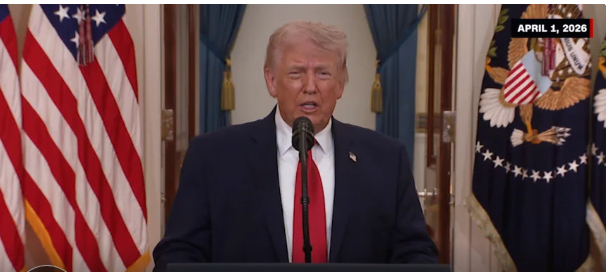
Trump described the project as a next generation missile shield capable of intercepting attacks launched from across the world or even space. The design includes satellite networks, orbital tracking systems, and advanced interceptors. However, experts warn that building such a unified system across vast distances presents extreme technical complexity.
The Congressional Budget Office raised concerns about whether the Golden Dome can fully protect the United States. Officials warned that even advanced systems may fail against coordinated attacks from major powers like Russia or China, especially during large scale missile salvos.
Modern threats include hypersonic weapons and stealth cruise missiles that travel unpredictably. These systems challenge even the most advanced missile detection technology. Additionally, space based sensors face risks from cyber attacks, signal delays, and orbital congestion, which may reduce system reliability during high intensity conflict scenarios.
| Category | Estimated Cost | Key Function |
|---|---|---|
| Interceptor Systems | $600B+ | Missile destruction |
| Space Sensors | $300B+ | Early warning detection |
| Command Systems | $200B+ | Coordination and control |
| Operations (20 years) | $100B+ | Maintenance and upgrades |
International reaction remains divided as the Golden Dome project gains momentum. NATO allies cautiously evaluate whether the system could strengthen collective defense frameworks. At the same time, geopolitical rivals view it as a shift in strategic balance.
Russia and China express concern that advanced missile shields could weaken nuclear deterrence stability. They argue that space based defense systems may trigger new arms competition. Meanwhile, US officials insist the system remains purely defensive and designed to counter evolving aerial threats, not escalate conflict.
The Golden Dome proposal reflects a growing shift toward orbital warfare technology. Military planners increasingly explore space surveillance networks, autonomous interception systems, and AI driven threat detection platforms to counter next generation missile threats.
SpaceX and Lockheed Martin recently secured contracts worth up to $3.2 billion to develop space based interceptor prototypes. These partnerships highlight the expanding role of private aerospace firms in national defense. However, experts warn that integrating such systems into a fully operational shield across a continent remains a highly uncertain challenge.
The Golden Dome represents one of the most ambitious defense visions in modern US history. It combines advanced technology, massive funding, and long term strategic planning into a single system designed to counter evolving global threats.
Despite its ambition, uncertainty remains high. Costs continue rising, technical feasibility remains debated, and geopolitical risks continue evolving. Still, the push for stronger missile defense infrastructure reflects a broader global trend where nations race to secure dominance in space, cyber, and advanced weapons systems.